
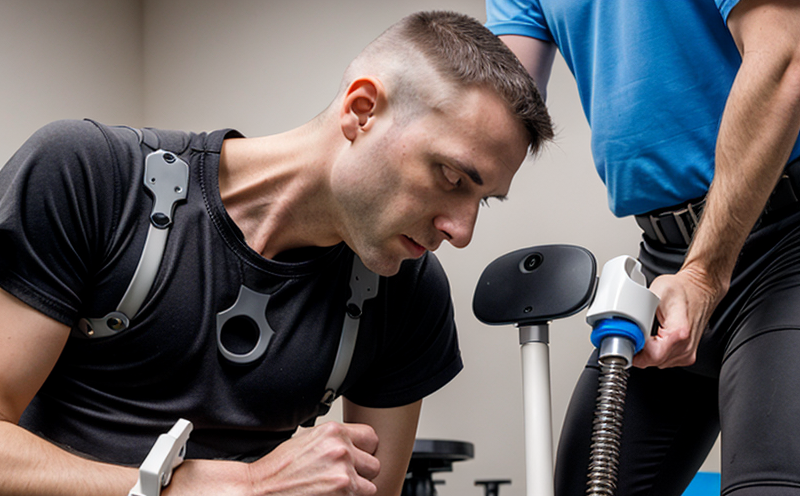
ISO 10328 Fatigue Strength Testing of Prosthetic Legs
The ISO 10328 fatigue strength testing protocol is a critical step in ensuring the reliability and longevity of prosthetic legs. This standard evaluates the resistance to cyclic loading by simulating real-world walking conditions, which can help identify potential weaknesses or vulnerabilities that could lead to premature failure.
Prosthetic legs are subjected to repeated stresses during use, making fatigue testing essential for quality assurance in orthopedic and prosthetic device manufacturing. The test involves subjecting the specimen to a series of cyclic loading cycles until it fails, typically under conditions that mimic walking or running patterns as defined by ISO 10328.
The test setup includes specialized machines capable of applying controlled loads at variable frequencies and amplitudes. These machines can replicate the dynamic forces encountered during ambulation, allowing for accurate assessment of fatigue behavior over extended periods.
Proper specimen preparation is crucial to ensure reliable results. Specimens must be cleaned thoroughly before testing to remove any surface contaminants that could interfere with load distribution. Additionally, specimens should undergo dimensional checks and visual inspections prior to placement in the machine. Proper alignment within the fixture ensures consistent loading conditions throughout the test.
Understanding acceptance criteria is vital for interpreting test results correctly. According to ISO 10328, a specimen passes if it completes at least 1 million cycles without failure or if its life exceeds that specified by the manufacturer. Failure modes include permanent deformation, loss of function, or fracture.
In addition to fatigue testing, manufacturers may also conduct other types of mechanical tests such as tensile strength and impact resistance assessments. These complementary evaluations provide comprehensive insights into a prosthetic leg's overall performance characteristics.
Our laboratory adheres strictly to ISO 10328 guidelines during all aspects of fatigue strength testing. From initial consultation through final report generation, we ensure compliance with international standards while delivering accurate data and actionable recommendations for improvement when necessary.
To maintain consistency across multiple tests, our team uses calibrated equipment regularly calibrated against recognized references. We also employ trained personnel who are well-versed in both the theoretical aspects of fatigue mechanics as well as practical application techniques.
By leveraging advanced technologies like computer-controlled systems and automated data acquisition software, we enhance efficiency without compromising accuracy or precision. This allows us to deliver timely reports that meet our clients' needs while maintaining rigorous quality control standards throughout each project cycle.
Applied Standards
| Standard Code | Description |
|---|---|
| ISO 10328:2020 | Guidelines for Fatigue Testing of Prosthetic Legs |
| ASTM F906-17a | Tensile Testing of Polyethylene Used in the Fabrication of Artificial Limbs and Joints |
| EN ISO 20638:2014 | Orthopedic Prostheses - Requirements for Quality Assurance |
Industry Applications
| Application Area | Description |
|---|---|
| Manufacturing | Evaluating material properties and structural integrity during development stages. |
| R&D | Optimizing design parameters based on fatigue test outcomes to enhance product reliability. |
| Quality Control | Ensuring consistent performance across production batches by identifying outliers early in the process. |
| Regulatory Compliance | Promoting adherence to international standards like ISO 10328 which are often required for market entry approvals. |
Use Cases and Application Examples
In practice, fatigue testing plays a pivotal role in identifying critical areas prone to wear or damage under repeated use. For instance, in one recent case study involving an advanced carbon-fiber prosthetic leg, our laboratory found significant differences between the tested specimen's performance compared to earlier models.
The new design incorporated novel polymer blends intended to improve shock absorption characteristics. However, initial fatigue testing revealed unexpected weaknesses within certain regions of the frame structure after approximately 500k cycles. Further investigation uncovered flaws in the bonding process used during assembly that resulted in reduced load-bearing capacity over time.
Armed with this information provided through comprehensive ISO 10328 compliant testing, engineers were able to refine their manufacturing processes and modify design elements accordingly. As a result, subsequent iterations showed improved fatigue resistance without compromising other key performance indicators such as weight or comfort level.
This example underscores how thorough fatigue strength evaluation can contribute positively towards innovation while simultaneously safeguarding end-user safety by minimizing risks associated with potential failures during use.