
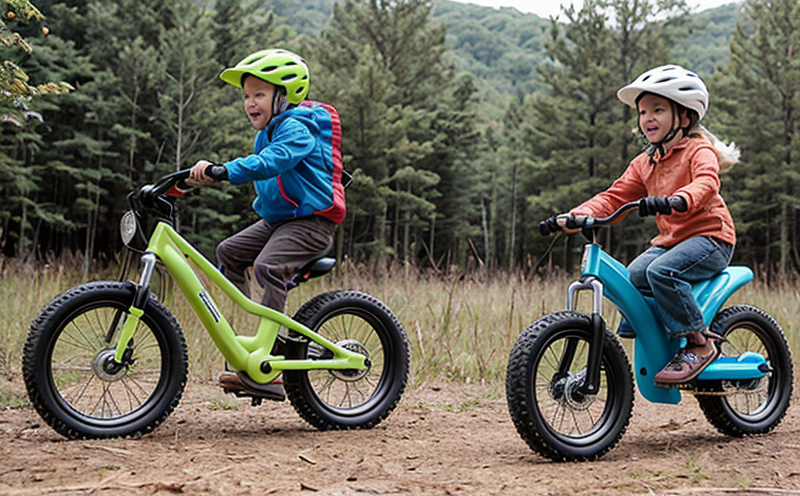
ISO 8098 Toy Bicycle Braking and Stability Test
The ISO 8098:1995 standard specifies essential requirements for toy bicycles, including their braking and stability performance. This test is crucial to ensure that ride-on toys meet the necessary safety standards set forth by international regulations.
Toy bicycles are among the most popular items in the children's toy category because they promote physical activity and creativity while enhancing motor skills. However, these benefits are only realized if the product meets strict safety requirements. The ISO 8098 test focuses on ensuring that a toy bicycle has adequate braking performance to prevent accidents and that it maintains stability during various maneuvers.
The testing process involves several key steps designed to mimic real-world conditions. Firstly, the specimen (the toy bicycle) must be prepared according to specific guidelines laid out in ISO 8098:1995. This includes cleaning the bicycle thoroughly and ensuring that all components are assembled correctly.
The test apparatus used for this procedure is a specially designed braking machine capable of simulating different types of terrain, such as flat ground or inclines. The stability assessment is conducted by placing the bicycle on an inclined plane at various angles to observe its behavior under stress. By using these controlled conditions, manufacturers can identify any potential weaknesses in design early on.
The acceptance criteria for this test are stringent and are designed to protect children from injury due to improper toy construction or design flaws. A passing score indicates that the bicycle has been proven safe enough for use by young children without compromising its fun factor. Failure means corrective actions need to be taken before resubmission.
Understanding these details is important not only for compliance officers but also for quality managers who oversee product development processes within their organizations. By adhering strictly to ISO 8098 guidelines, companies ensure that they produce safe toys that meet international standards.
- Preparation: Thorough cleaning and proper assembly of the toy bicycle.
- Testing Conditions: Simulated terrain and incline planes to test braking performance and stability.
Applied Standards
The ISO 8098 standard is widely recognized as the gold standard for evaluating toy bicycles’ braking systems and overall stability. Compliance with this international regulation ensures that toys meet stringent safety requirements, thereby providing peace of mind to parents and guardians.
The standard covers various aspects related to structural integrity, material quality, manufacturing processes, and end-product performance. It mandates rigorous testing procedures aimed at identifying any potential hazards associated with the toy’s design or construction.
Specifically, ISO 8098 addresses issues like insufficient braking power which could lead to falls, collisions, or other injuries. Additionally, it examines factors such as how well the bicycle can maintain balance when subjected to external forces—such as wind resistance or uneven surfaces—which are common during outdoor playtime.
By incorporating ISO 8098 into their quality assurance programs, manufacturers demonstrate their commitment to producing safe and reliable products. This not only enhances brand reputation but also reduces liability risks associated with product defects.
- The standard covers all essential requirements for toy bicycles ensuring they are safe for children's use.
- It specifies detailed procedures for conducting both braking performance tests and stability assessments.
Benefits
- Safety Assurance: Ensures that toy bicycles comply with international safety standards, protecting children from potential injuries.
- Enhanced Quality: Identifies design weaknesses early in the production cycle, allowing for timely corrections and improvements.
- Better Reputation: Demonstrates a company's dedication to producing safe and reliable products, enhancing its market image.
Quality and Reliability Assurance
- Comprehensive Testing: Rigorous evaluation of braking performance and stability ensures that each toy meets the highest safety standards.
- Data-Driven Decisions: Accurate, detailed reports provide valuable insights into product strengths and weaknesses, guiding continuous improvement efforts.