
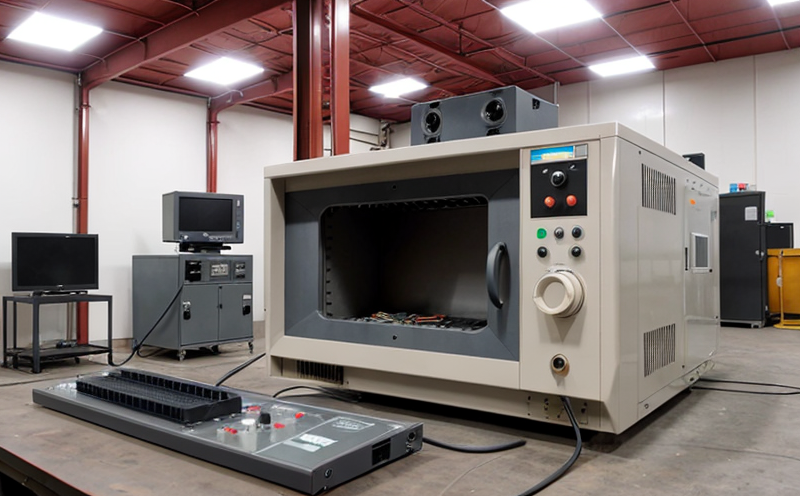
IEEE 1547 Testing for Distributed Energy Industrial Electronics
The IEEE Standard 1547 is a critical framework designed to ensure that distributed energy resources (DERs) such as solar panels, wind turbines, and other renewable power generators can safely integrate into the existing electrical grid. This standard specifies performance requirements for interconnection of DERs with utility distribution systems. For industrial electronics, these tests are essential in ensuring compliance with international standards which ultimately boosts system reliability and safety.
Industrial electronics often incorporate distributed energy resources as a way to optimize energy consumption and reduce operational costs. The IEEE 1547 testing is particularly important for such applications because it helps identify potential issues that could arise from the integration of these systems into the grid. For instance, improper interconnection can lead to voltage fluctuations, overloading of transformers, or even dangerous power quality issues.
The process typically involves a series of tests designed to evaluate how well the industrial electronics system functions under various conditions. These include short-circuit capacity verification, maximum demand testing, and power factor correction evaluation among others. Compliance with IEEE 1547 ensures that your equipment meets these stringent requirements without causing harm to other connected devices or the grid itself.
Our laboratory uses state-of-the-art facilities equipped with sophisticated instrumentation capable of simulating real-world scenarios accurately. We employ highly experienced engineers who possess deep knowledge about both theoretical aspects and practical implementation details related to this standard. Our goal is not only to meet but exceed expectations set forth by IEEE 1547 while providing detailed reports tailored specifically towards your needs.
By choosing our service, you gain access to expert advice throughout the entire process from initial consultation through final certification. We understand that every project has unique requirements so we tailor our approach accordingly ensuring optimal results each time. Additionally, our comprehensive report provides clear insights into any areas where improvements could be made further enhancing your overall efficiency and performance.
In summary, IEEE 1547 testing plays a crucial role in safeguarding both the integrity of industrial electronics systems as well as the stability of connected utility networks. By partnering with us, you ensure that all relevant aspects are thoroughly examined ensuring compliance with current best practices recognized worldwide.
Scope and Methodology
The IEEE 1547 testing involves several key components aimed at assessing different facets of the interaction between industrial electronics and the grid. Firstly, short-circuit capacity verification checks whether your system can safely handle fault currents without causing damage or failure.
- Short-Circuit Capacity Verification: Ensures that the equipment can withstand high levels of current during faults without being damaged.
- Maximum Demand Testing: Evaluates peak power output under specified conditions to ensure it does not exceed allowable limits.
- Power Factor Correction Evaluation: Measures how efficiently electricity is used within your system ensuring minimal losses and wasted energy.
In addition, we also conduct ground fault current limiting evaluation which assesses the effectiveness of the protective devices installed to limit fault currents. This helps prevent overloading or tripping of circuit breakers leading to prolonged outages. Each test has its own set of criteria based on specific parameters that must be met for successful completion.
The methodology we follow closely adheres to IEEE 1547 standards ensuring accuracy and consistency across all projects. Our team works diligently using advanced tools and techniques to ensure every aspect is covered comprehensively. From initial setup through final analysis, our goal remains consistent - providing reliable data that supports informed decision-making.
Why Choose This Test
Selecting IEEE 1547 testing for your industrial electronics offers numerous benefits beyond mere compliance with regulatory requirements. One significant advantage lies in enhanced reliability and safety of operations within the grid environment. By ensuring that all components function correctly according to established guidelines, potential hazards are minimized significantly reducing risks associated with improper interconnection.
Another key benefit is improved efficiency resulting from optimized energy usage patterns. Through precise evaluation of power factor correction, maximum demand testing, and short-circuit capacity verification, inefficiencies can be identified early allowing for timely adjustments that lead to substantial savings over time. This also contributes positively towards sustainability goals by promoting cleaner more sustainable practices.
Furthermore, choosing our service means gaining access to valuable insights through detailed reports which offer actionable recommendations based on findings from rigorous testing procedures. These reports serve multiple purposes including but not limited to internal documentation, stakeholder communication, and future planning initiatives. They act as a roadmap guiding continuous improvement efforts ensuring long-term success.
Finally, selecting this service demonstrates your commitment to adhering to global best practices recognized by industry leaders. This can enhance credibility among peers and stakeholders alike fostering stronger relationships built on trust and mutual respect. In today's competitive marketplace where reputation counts significantly, such recognition can make a substantial difference in establishing yourself as a leader within your field.