
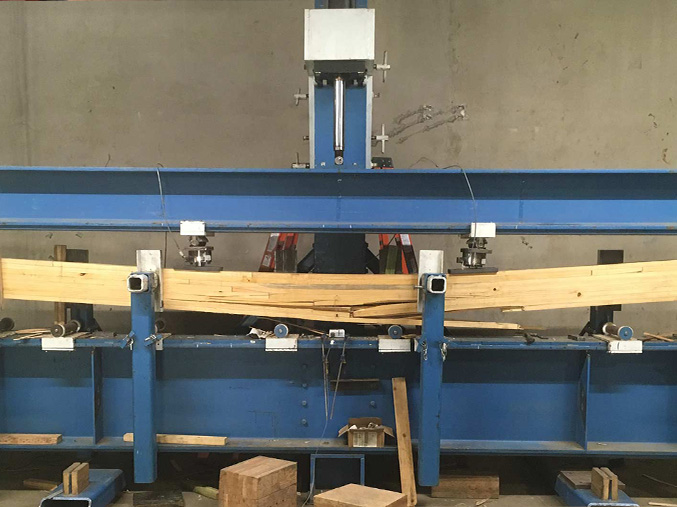
EN 1995 Structural Timber Performance Verification
The European Standard EN 1995-1-1 provides a framework to ensure that structural timber components are designed and constructed in accordance with the required safety, serviceability, and durability criteria. This standard is particularly relevant for structures where timber plays a critical role, such as buildings, bridges, and civil infrastructure projects.
EN 1995-1-1 covers the design of wood structures subjected to various loading conditions including dead loads, live loads, wind loads, snow loads, and seismic actions. It ensures that all structural elements are capable of withstanding these forces without compromising safety or performance. The standard is applicable to both new constructions and the assessment of existing timber structures.
The testing process under EN 1995 involves several key steps:
- Specimen selection
- Loading apparatus setup
- Data acquisition using specialized instrumentation
- Analytical assessment of results against design criteria
- Reporting and documentation for compliance verification
The primary purpose of this test is to verify that the structural timber components meet or exceed the performance requirements set forth in EN 1995-1-1. This includes checking for adequate strength, stiffness, and durability under static and dynamic loading conditions.
Testing typically involves the use of large-scale specimens representing actual structural elements such as beams, columns, and trusses. The specimens are subjected to progressively increasing loads until failure occurs or a predetermined load level is reached. Throughout this process, data is collected using advanced instrumentation that measures strain, displacement, stress, and other relevant parameters.
The results of these tests provide critical insights into the structural behavior of timber components under real-world loading conditions. This information is invaluable for ensuring compliance with regulatory standards, enhancing safety margins, and optimizing design parameters to meet project-specific requirements.
By adhering to EN 1995-1-1, engineers can ensure that their designs are robust, reliable, and capable of withstanding the rigors of service. This not only enhances public safety but also contributes to sustainable construction practices by promoting the use of renewable materials like timber.
In summary, EN 1995 Structural Timber Performance Verification is a vital tool for ensuring that structural timber components are designed and constructed in accordance with international best practices. It plays a crucial role in safeguarding public safety and fostering the responsible use of timber as a sustainable building material.
Benefits
- Compliance Assurance: Ensures that structural timber components comply with international standards, enhancing safety and reliability.
- Design Optimization: Provides detailed data on the performance of timber specimens under various loading conditions, aiding in design optimization.
- Safety Enhancement: Identifies potential weaknesses in structural elements before they are used in construction, reducing risks to public safety.
- Sustainability: Supports sustainable building practices by validating the use of renewable materials like timber.
- Regulatory Compliance: Helps in meeting regulatory requirements and gaining necessary approvals for projects involving structural timber.
- Credibility: Establishes credibility with clients, stakeholders, and regulators by demonstrating adherence to stringent testing protocols.
- Risk Management: Minimizes the risk of costly failures or accidents during construction and use phases.
Why Choose This Test
Selecting EN 1995 Structural Timber Performance Verification offers numerous advantages that can significantly impact project outcomes. Firstly, it ensures that all structural timber components are rigorously tested against international standards, thereby enhancing their safety and reliability. Compliance with these standards is crucial for projects aiming to meet regulatory requirements and gain necessary approvals.
Secondly, the test provides invaluable data on the performance of timber specimens under various loading conditions. This information is essential for optimizing design parameters and ensuring that structural elements are robust enough to withstand real-world stresses. By leveraging this data, engineers can enhance the durability and longevity of timber structures, which is particularly important for long-lasting civil infrastructure projects.
Thirdly, choosing EN 1995 testing demonstrates a commitment to public safety by identifying potential weaknesses in structural elements before they are used in construction. This proactive approach helps minimize the risk of costly failures or accidents during both the construction and use phases of a project. Additionally, it establishes credibility with clients, stakeholders, and regulators, as it demonstrates adherence to stringent testing protocols.
Finally, this test supports sustainable building practices by validating the use of renewable materials like timber. By ensuring that structural timber components meet rigorous performance criteria, it promotes the responsible and efficient use of natural resources in construction projects.
Customer Impact and Satisfaction
The impact of EN 1995 Structural Timber Performance Verification extends beyond compliance with regulatory standards. It directly influences the quality, safety, and durability of structural timber components used in various projects. This has a significant positive impact on customers by ensuring that they receive reliable and safe products.
For quality managers and compliance officers, this test provides them with the confidence needed to ensure that their projects meet or exceed international standards. This not only simplifies the approval process but also enhances project credibility in the eyes of stakeholders. For R&D engineers and procurement teams, it offers valuable insights into the performance characteristics of timber components under different loading conditions.
By selecting this test, customers can be assured that their structural timber components are robust enough to withstand the rigors of service. This contributes to sustainable construction practices by promoting the responsible use of renewable materials like timber. Ultimately, it ensures that projects are completed on time and within budget while maintaining high standards of quality and safety.