
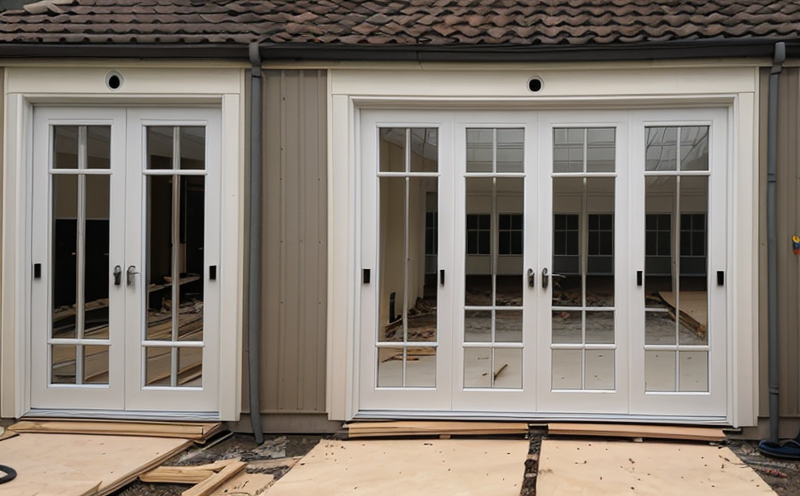
EN 1634-1 Fire Resistance and Smoke Control Tests for Doors and Shutters
The EN 1634-1 standard is a crucial framework for ensuring that doors, windows, and partitions are capable of withstanding fire exposure while maintaining smoke control. This European standard defines the requirements for testing the fire resistance and integrity of these components in accordance with a standardized procedure. The primary goal is to ensure that such elements provide an essential barrier against fire spread within buildings, thereby enhancing safety during emergencies.
Testing under EN 1634-1 involves exposing specimens to controlled fire conditions and measuring their ability to resist flames, smoke generation, and structural collapse for a specified duration. This testing not only evaluates the performance of individual components but also assesses how they contribute collectively towards overall building safety. The standard specifies various classes of doors based on their fire resistance capabilities, which are designated as Class A1, A2, B, C, D, E, F, and G.
Class A1 doors can maintain both structural integrity and smoke control for a minimum duration specified in the standard. Classes B through G have progressively reduced performance levels regarding either or both of these criteria. Compliance with this standard is mandatory for certain fire safety critical applications such as exits from buildings, corridors leading to exits, and areas where significant numbers of people gather.
During testing under EN 1634-1, the specimen is placed within a furnace that simulates real-world fire conditions. The furnace temperature rises at a controlled rate until it reaches the required test temperature—typically between 750°C to 950°C depending on the class of door being tested. Specimens are exposed to these temperatures for durations ranging from half an hour up to three hours, based on their expected service life and criticality.
The specimens undergo rigorous monitoring during testing, including temperature measurements inside and outside the furnace, observation of flame penetration through the specimen, measurement of smoke generation levels, and assessment of structural integrity. Compliance with all specified criteria is required for successful passage of the test.
Proper preparation of specimens prior to testing is vital in ensuring accurate results. This includes cleaning the surface of the specimen thoroughly, marking it appropriately according to the standard’s requirements, and securing it correctly within the furnace setup. The correct positioning of the specimen ensures that all critical areas are exposed equally to the test environment.
The EN 1634-1 certification provides significant benefits for manufacturers, installers, and end-users alike by offering assurance regarding fire safety performance. For manufacturers, compliance with this standard helps in meeting regulatory requirements and gaining market acceptance. Installers can use certified products confidently knowing they meet stringent standards. End-users benefit from increased confidence that their facilities are safer against potential fires.
In summary, EN 1634-1 is a vital standard for ensuring fire safety through the rigorous testing of doors, windows, and partitions. Its implementation contributes significantly to enhancing building safety by providing robust evidence of performance under extreme conditions. Proper adherence to this standard ensures that all parties involved—manufacturers, installers, and end-users—are aligned towards achieving higher levels of fire resistance and smoke control.
- Enhanced Safety: Ensures that doors, windows, and partitions can withstand fire exposure while maintaining structural integrity and effective smoke control.
- Regulatory Compliance: Meets mandatory requirements for fire safety critical applications such as exits from buildings and corridors leading to them.
- Market Acceptance: Provides assurance of product quality, helping manufacturers gain market acceptance.
Eurolab Advantages
EuroLab is a leading provider of fire safety testing services, specializing in EN 1634-1 compliance. Our state-of-the-art facilities and experienced professionals ensure that we deliver accurate, reliable, and timely test results. Here are some key advantages of choosing EuroLab for your fire resistance testing needs:
- Comprehensive Testing Capabilities: We offer a full range of services to meet all your fire safety requirements.
- Expertise and Experience: Our team comprises highly skilled professionals with extensive experience in fire safety testing.
- Accurate Results: EuroLab utilizes advanced equipment and techniques to ensure precise test results.
- Timely Delivery: We understand the importance of timely delivery and strive to meet your deadlines.
- Comprehensive Reporting: Our reports are detailed, clear, and provide all necessary information for regulatory compliance and decision-making.
- Customer Support: EuroLab offers unparalleled customer support throughout the testing process.
EuroLab’s commitment to quality and excellence makes us your ideal partner for fire safety testing. With our expertise and advanced facilities, you can rest assured that your products will meet or exceed all relevant standards.
Why Choose This Test
Selecting the appropriate test is crucial for ensuring compliance with fire safety regulations. Here are some compelling reasons why you should choose EN 1634-1 testing:
- Mandatory Compliance: Compliance with this standard is mandatory for certain fire safety critical applications, including exits from buildings and corridors leading to them.
- Rigorous Testing: The test provides a comprehensive evaluation of the specimen's ability to resist flames, smoke generation, and structural collapse under controlled conditions.
- Evidence-Based Assurance: Successful passage of this test offers robust evidence that your products meet stringent fire safety performance standards.
- Market Acceptance: Certified products gain market acceptance due to their proven reliability in meeting regulatory requirements.
- Confidence for End-Users: Enhanced confidence among end-users knowing they are using products that have been rigorously tested and certified.
- Regulatory Compliance: Ensures that your products meet all relevant fire safety regulations, thereby reducing the risk of non-compliance penalties.
In summary, EN 1634-1 testing is a vital step in ensuring compliance with fire safety standards. It provides robust evidence of product performance and enhances market acceptance and end-user confidence.
Environmental and Sustainability Contributions
The implementation of EN 1634-1 fire resistance testing contributes significantly to environmental sustainability by enhancing fire safety and minimizing the impact of fires on infrastructure. By ensuring that doors, windows, and partitions can withstand extreme conditions while maintaining smoke control, this standard helps prevent the spread of fires within buildings. This, in turn, reduces the risk of extensive property damage and loss of life.
Compliance with EN 1634-1 also promotes sustainable building practices by encouraging the use of materials that are resistant to fire and capable of maintaining structural integrity during a fire event. This reduces the need for frequent replacements and repairs, thereby extending the lifecycle of buildings. Additionally, by minimizing the spread of fires, these products help conserve resources and reduce waste.
The standard also supports sustainable practices through its emphasis on reducing smoke generation. Lower levels of smoke production contribute to better indoor air quality, which is crucial for maintaining healthy living and working environments. Furthermore, reduced smoke emissions can lead to fewer respiratory issues among occupants, contributing positively to public health.
In conclusion, EN 1634-1 fire resistance testing plays a vital role in promoting environmental sustainability by enhancing fire safety, reducing property damage, minimizing waste, and supporting sustainable building practices. By choosing products that meet this standard, you contribute to creating safer, healthier, and more sustainable buildings for future generations.