Electrical Safety Testing of Household Appliances
The electrical safety testing of household appliances is a critical component in ensuring that products meet local and international standards for consumer protection. Electrical hazards are among the most dangerous risks associated with household appliances, making thorough and rigorous testing essential before any product reaches market or retail.
Our service offers comprehensive analysis to ensure that all electrical components within household appliances are safe from overheating, short-circuiting, and other potential failures. This includes tests for insulation resistance, dielectric strength, ground fault protection, and overcurrent protection among others. Compliance with relevant standards such as IEC 60335-2-8 ensures not only product safety but also legal compliance.
Our team of experienced engineers uses state-of-the-art equipment to conduct these tests in controlled laboratory environments that simulate real-world conditions as closely as possible. This allows us to identify potential issues early on, preventing costly recalls and safeguarding end-users against harm.
The process typically begins with a detailed review of the appliance’s design documentation provided by our clients. From there, we perform initial assessments based on industry knowledge and experience before delving into more specific testing procedures tailored directly towards each product type.
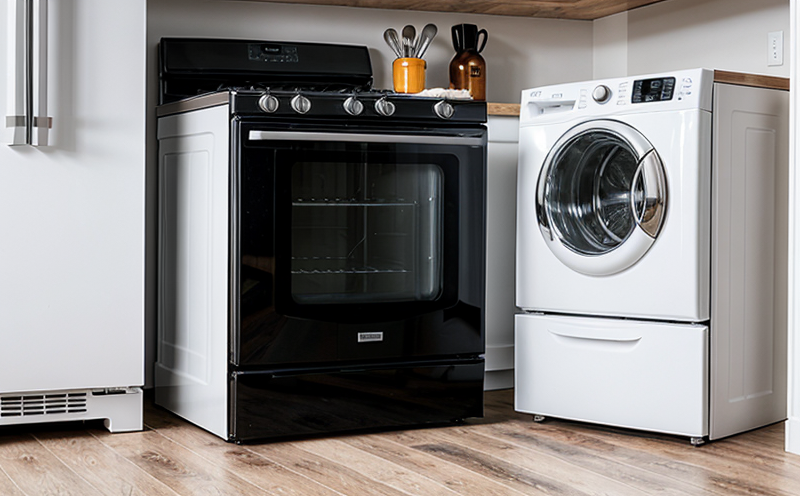
For instance, washing machines require tests related to motor insulation while refrigerators might necessitate evaluation concerning door latches' integrity under electrical load. By understanding the unique characteristics of different appliance types, we can better tailor our approach ensuring accurate and reliable results every time.
In summary, comprehensive electrical safety testing not only enhances product performance but also builds trust between manufacturers and consumers alike. It plays a pivotal role in maintaining high standards across various sectors including healthcare, electronics manufacturing, and home goods retailing among others.
Applied Standards
| Standard | Description |
|---|---|
| IEC 60335-2-8:2014 | Test conditions and requirements for household electrical appliances - Part 2: Specific requirements - Section 8: Tests on electrically operated washing machines. |
| UL 94:2021 | Flame retardant plastics used in electrical and electronic components. |
| CENELEC EN 60335-2-14:2017 | Specific requirements for household electrical appliances - Part 2: Particular requirements - Section 14: Tests on electrically operated kitchen ovens. |
Competitive Advantage and Market Impact
- Early identification of defects leading to enhanced product quality and reduced warranty claims.
- Increased market share through consistent compliance with global regulations.
- Reduced risk exposure due to non-compliance penalties or recalls.
By offering this specialized service, we position ourselves at the forefront of innovation within our industry. Our commitment to excellence ensures that your products remain competitive in both domestic and export markets.
Use Cases and Application Examples
- Testing for Insulation Resistance: Ensuring that insulating materials between live parts and accessible conductive parts have sufficient resistance to prevent electric shock. This is particularly important for devices like hair dryers where prolonged exposure could lead to severe injuries.
- Dielectric Strength Test: Verifying the ability of insulation systems to withstand high voltage without breakdown or failure, which applies especially to transformers and capacitors within appliances.
These tests are just two examples among many others that demonstrate how our expertise contributes towards building safer products. These services go beyond mere compliance; they contribute significantly toward creating trust between companies and their customers.