
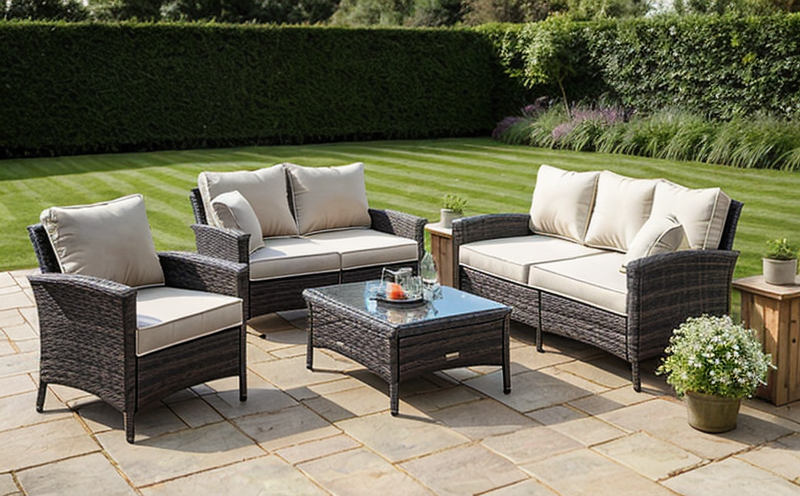
BS EN 1728 Mechanical Load Testing of Outdoor Seating Furniture
The BS EN 1728:2013 standard specifies the requirements and test methods for the mechanical load testing of outdoor seating furniture. This is a critical aspect of ensuring that garden, patio, and public seating furniture can withstand the rigors of outdoor use without compromising safety or structural integrity.
The standard applies to various types of seating such as chairs, benches, and tables designed for exterior use. It covers both static and dynamic load testing scenarios to evaluate how these pieces behave under typical conditions found in a garden setting. Static tests assess whether the furniture can support specified weights without collapsing, while dynamic tests simulate real-world movements like people sitting down or standing up.
Testing according to this standard is essential for manufacturers who wish to ensure their products meet international quality standards and comply with regulations in countries that adopt this European Norm (EN). Compliance also helps protect consumers by reducing the risk of accidents caused by poorly designed or manufactured outdoor furniture.
The test procedure outlined in BS EN 1728 involves several key steps including specimen preparation, equipment setup, calibration procedures, application of loads, and measurement of responses. Specimens are typically prepared from samples taken directly from production batches to ensure they represent actual product characteristics accurately.
Equipment used during testing includes calibrated hydraulic presses capable of applying known forces at specific positions on the furniture frame or legs where loading is most critical. Load cells measure applied force precisely, and strain gauges monitor deformation levels throughout each test run. Data collected from these instruments are analyzed to determine whether the tested items pass or fail based on predefined acceptance criteria.
Acceptance criteria vary depending upon factors such as intended use (e.g., leisure parks versus residential backyards), expected lifespan of the product, and environmental conditions where it will be installed. For instance, furniture placed in areas prone to heavy rainfall might have stricter tolerances for water penetration than those located indoors.
Failure modes common when testing outdoor seating include structural failure under load, cracking or splitting of components due to excessive deformation, and loosening or detachment of fasteners holding parts together securely. Passing these tests demonstrates that the furniture has been engineered robustly enough to perform safely over extended periods outdoors.
To summarize, BS EN 1728 provides crucial guidance for manufacturers aiming to produce durable, safe outdoor seating furniture suitable for various applications across different sectors. By adhering to its stringent requirements and thorough testing protocols, companies can gain valuable insights into their product performance while ensuring compliance with relevant international standards.
Industry Applications
The application of BS EN 1728 mechanical load testing extends beyond just manufacturing. Quality managers within furniture companies rely on these tests to verify that newly developed products meet specified strength and durability targets before going into production. Compliance officers use the results as part of broader efforts aimed at ensuring adherence to local and international regulations governing consumer safety.
R&D engineers involved in product development utilize test data obtained through BS EN 1728 procedures when refining designs for improved functionality or enhanced aesthetic appeal. Meanwhile, procurement teams benefit from knowing which suppliers consistently deliver goods meeting rigorous quality benchmarks established by this standard.
Outdoor furniture designers also find value in understanding the implications of different load testing specifications since they directly influence design decisions regarding materials selection and construction techniques employed during manufacturing processes.
Quality and Reliability Assurance
Ensuring quality and reliability is paramount for any manufacturer dealing with outdoor seating furniture. By implementing BS EN 1728 mechanical load testing, companies can identify potential weaknesses early in the development cycle, allowing them to address issues promptly before committing significant resources towards full-scale production runs.
The rigorous nature of these tests helps instill confidence among stakeholders that each piece of furniture meets required performance levels consistently. This consistency is especially important given the diverse range of environments where outdoor seating may be placed—from sunny patios to shaded courtyards, from coastal regions exposed to salt spray to arid climates prone to dust accumulation.
Additionally, adhering to international standards like BS EN 1728 demonstrates a commitment to excellence that resonates positively with customers and potential partners alike. It signals to the market that your organization prioritizes delivering high-quality products capable of standing up against harsh outdoor conditions over extended periods.
Use Cases and Application Examples
Case Study 1: A leading manufacturer of garden furniture wanted to introduce a new range of reclining deck chairs designed specifically for use on sandy beaches. Prior to launching the product line, they conducted extensive mechanical load testing according to BS EN 1728 guidelines. The tests revealed that certain structural elements needed reinforcement to handle increased pressure from users lying down in various positions. As a result, modifications were made during design iterations until satisfactory results were achieved.
Case Study 2: Another company specializing in public seating for parks and squares faced challenges ensuring compliance with local regulations requiring all outdoor furniture to pass stringent impact resistance tests. By incorporating BS EN 1728 into their quality assurance process, they were able to demonstrate full adherence to these standards without compromising on aesthetics or comfort.
Case Study 3: A supplier of commercial-grade seating for office complexes opted to undergo third-party certification based on meeting all requirements set forth by BS EN 1728. This not only helped build trust with clients but also opened up opportunities for expanding into new markets where similar standards were applicable.