
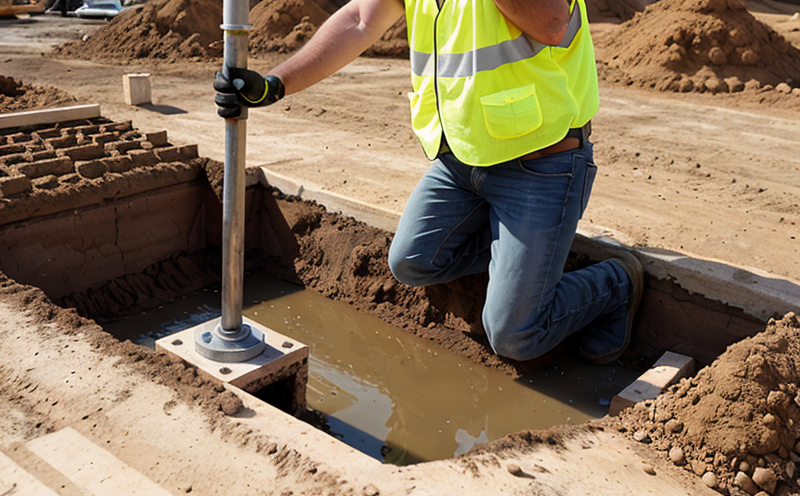
ASTM D1143 Pile Static Load Test
The ASTM D1143 Pile Static Load Test is a critical assessment of pile foundation integrity and capacity, a cornerstone in the construction industry. This test assesses the load-bearing capacity of piles or caissons by applying incremental loads to them until failure occurs or the specified load level is reached.
This service is essential for ensuring the structural safety and reliability of buildings and infrastructure projects involving pile foundations. It helps identify any potential issues with the design, materials, or installation of the foundation elements before they are fully operational. This test provides a comprehensive evaluation that can prevent costly failures and ensure compliance with relevant building codes.
The ASTM D1143 method is widely recognized for its accuracy in determining the ultimate load capacity of piles under static loading conditions. It involves applying loads to the pile incrementally, recording displacement data, and analyzing the results according to specific criteria defined by the standard. This ensures a thorough and reliable assessment of each pile's performance.
The test setup typically includes a hydraulic jack or crane for applying the load, strain gauges or other sensors for measuring deformations, and a load cell for accurately quantifying the applied force. The piles are embedded in soil that may vary significantly based on site conditions, affecting the test results. Thus, the soil profile plays a crucial role in determining the appropriate loading strategy.
For accurate results, it is essential to follow strict procedures outlined in ASTM D1143, including specimen preparation and instrumentation setup. The specimens (i.e., piles) must be cleaned thoroughly before testing to remove any debris or contaminants that could interfere with the test readings. Proper instrumentation placement ensures precise measurements of deformations and loads.
After applying each increment of load, data is recorded for both deformation and load values. This information helps in plotting a load-displacement curve, which provides valuable insights into the pile's behavior under stress. The ultimate capacity can be determined by identifying the point at which significant deformation occurs or where failure begins to occur.
Compliance with ASTM D1143 is mandatory for ensuring that all tests are conducted uniformly across different projects and regions. This standardization enhances confidence in the results, facilitating better decision-making processes regarding the suitability of pile foundations.
- Customer Impact and Satisfaction: By providing accurate and reliable data on pile capacity, this test significantly reduces the risk of structural failure during construction or operation phases. It also helps clients meet regulatory requirements and improve project outcomes through informed decisions based on validated test results.
The ASTM D1143 Pile Static Load Test is a vital tool for ensuring the safety and longevity of buildings and infrastructure projects involving pile foundations. Its rigorous methodology, coupled with stringent adherence to standards like ASTM D1143, ensures that clients receive dependable and actionable information about their foundation elements.
Industry Applications
The ASTM D1143 Pile Static Load Test finds extensive application in various sectors where pile foundations are crucial. These include commercial buildings, residential complexes, industrial facilities, bridges, tunnels, and other large-scale infrastructure projects. In these settings, the test plays a pivotal role in assessing the load-bearing capacity of piles or caissons before they go into service.
For instance, in high-rise construction, ensuring that each pile can support its share of the building's weight is paramount to preventing settlement and structural failure. Similarly, in bridge construction, accurate determination of pile capacities ensures safe passage for vehicles and pedestrians without compromising on aesthetics or functionality.
The test also has significant implications for environmental sustainability efforts by helping engineers design more efficient foundations that minimize soil disturbance during excavation processes. By selecting piles with adequate capacity from the outset, unnecessary reinforcement work can be avoided, leading to cost savings and reduced environmental impact.
Furthermore, this testing method supports ongoing maintenance programs by providing data on how well existing piles are performing over time. This information allows for targeted interventions before catastrophic failure occurs, thereby extending the lifespan of structures built upon pile foundations.
Competitive Advantage and Market Impact
The ASTM D1143 Pile Static Load Test offers significant competitive advantages by providing clients with unparalleled insights into the performance of their pile foundations. This service ensures that buildings and infrastructure projects are constructed safely and efficiently, reducing risks associated with foundation failures.
By leveraging this testing method, companies can demonstrate their commitment to quality and compliance, thereby enhancing their reputation in the market. Accurate data on pile capacities helps in optimizing resource allocation during design phases, leading to cost savings without compromising structural integrity.
In a highly competitive landscape, reliable test results from ASTM D1143 contribute to building strong client relationships based on trust and reliability. This can translate into repeat business and referrals, further strengthening market position. Moreover, adherence to international standards such as ASTM D1143 sets a benchmark for excellence that differentiates service providers in the industry.